
Most wood floors that look past saving aren’t. Under the grey surface, the paint splashes and forty years of wear, the timber is usually sound — it just needs taking back and sealing again. Sanding removes less than a millimetre. A solid floor will take that many times over.
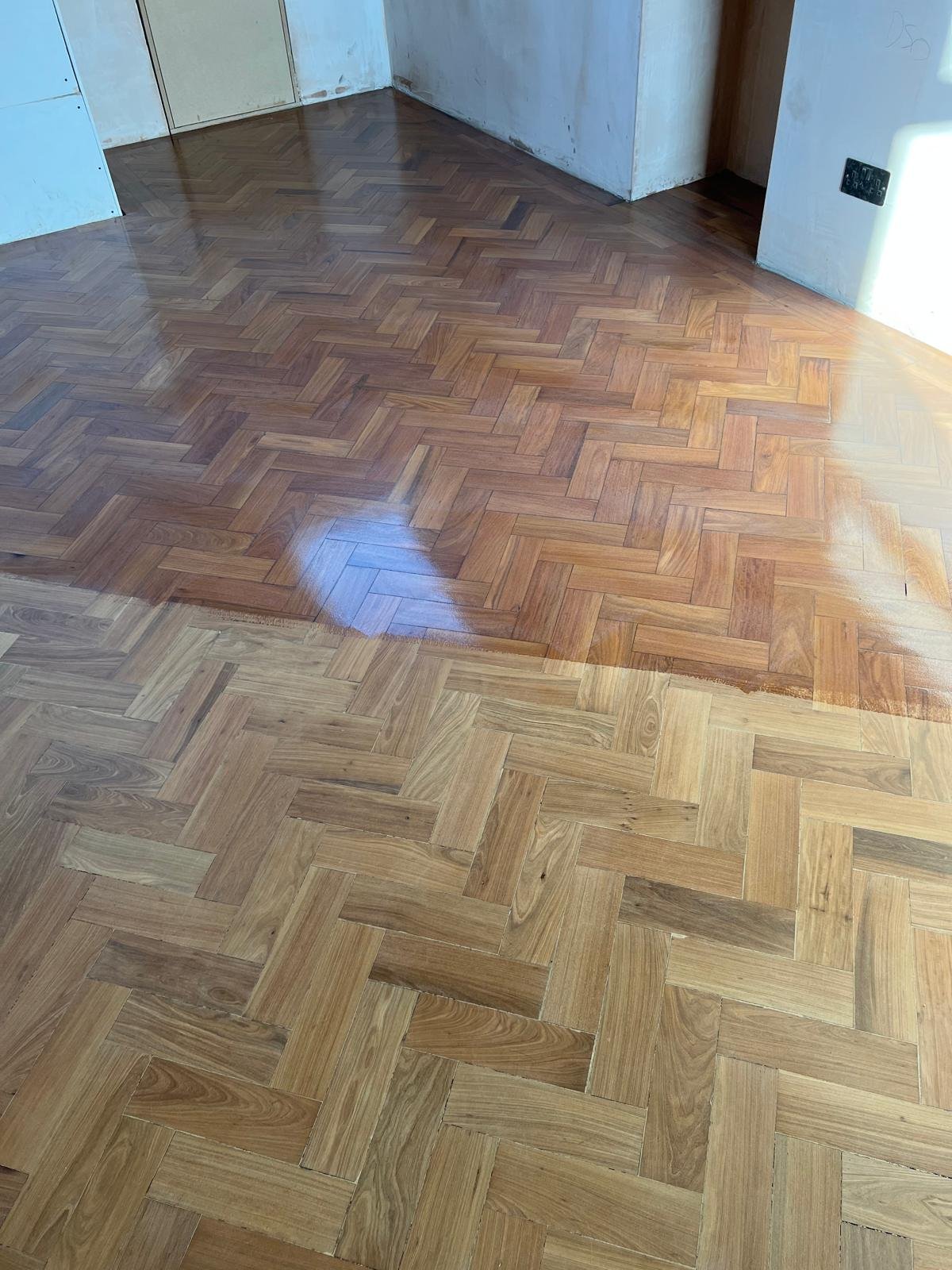
We sand and refinish wood floors across Orpington, Bromley, Bexley, south-east London and north Kent. It is most of what we do, and we have done it on more than 700 floors.
What dust-free actually means
Sanding wood makes dust — the question is where it goes. Our machines run on continuous extraction straight into sealed units, so the dust leaves the room instead of settling on everything in it.
Be wary of anyone promising zero dust. Edges and corners are finished by hand and there is always a small amount. What you should expect is a floor you can walk on the same day and a house you don’t have to deep-clean afterwards.
How it works
- Survey. We look at the floor, check board thickness and whether it has been sanded before, and tell you honestly if sanding is the wrong answer.
- Preparation. Furniture out, doors sealed, nails punched below the surface, loose or split boards fixed first. Sanding over a loose board just gives you a smooth loose board.
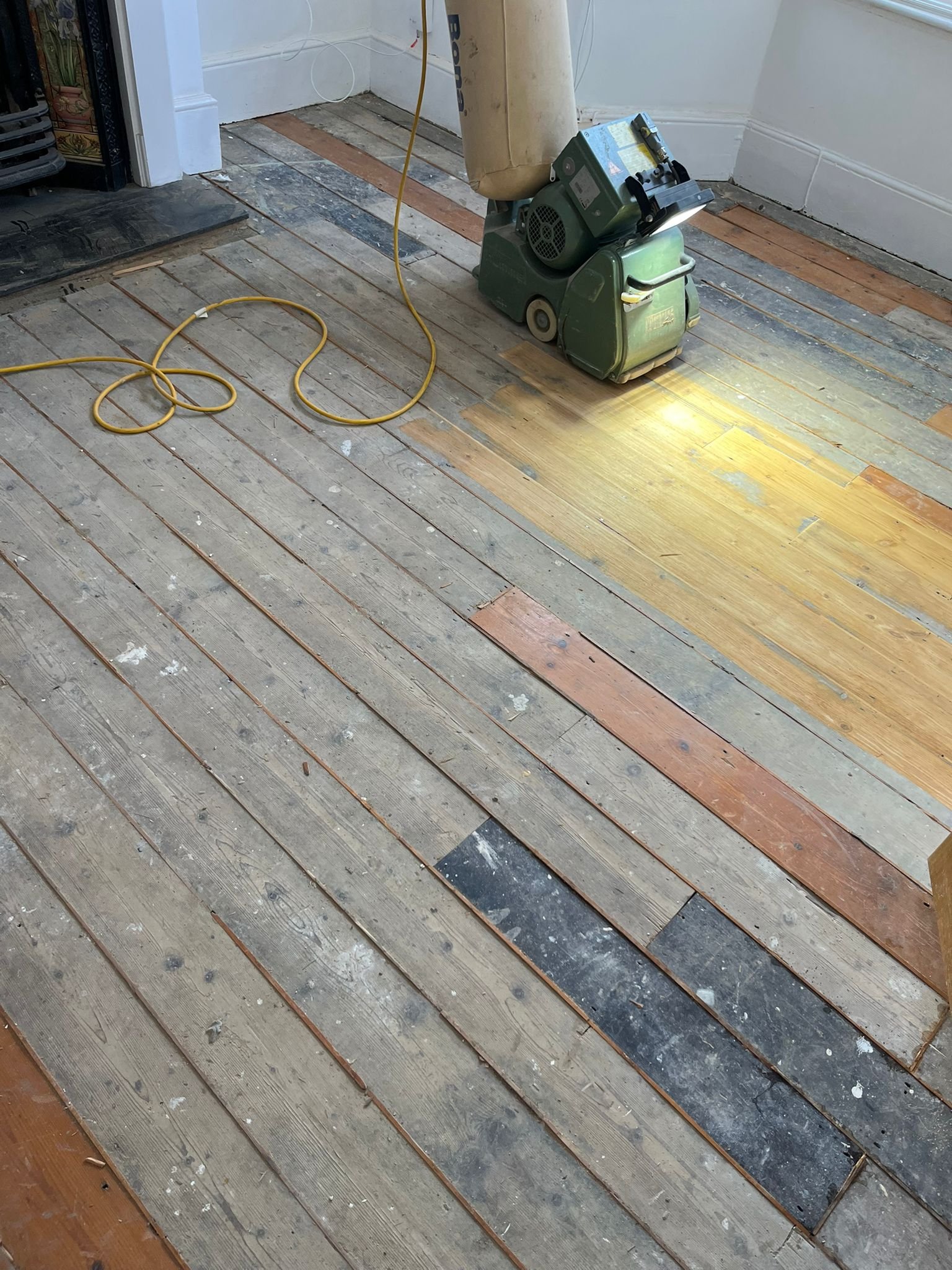
- Coarse sanding. The old finish and the top layer of damaged timber come off.
- Gap filling, if you want it. Resin and dust for hairline gaps, timber slivers for wide ones.
- Fine sanding. Progressively finer grits until the surface is even and closed.
- Finishing. Oil, hardwax oil or lacquer, two or three coats.
A single room is usually one to two days. A whole ground floor is typically three to five.
Choosing a finish
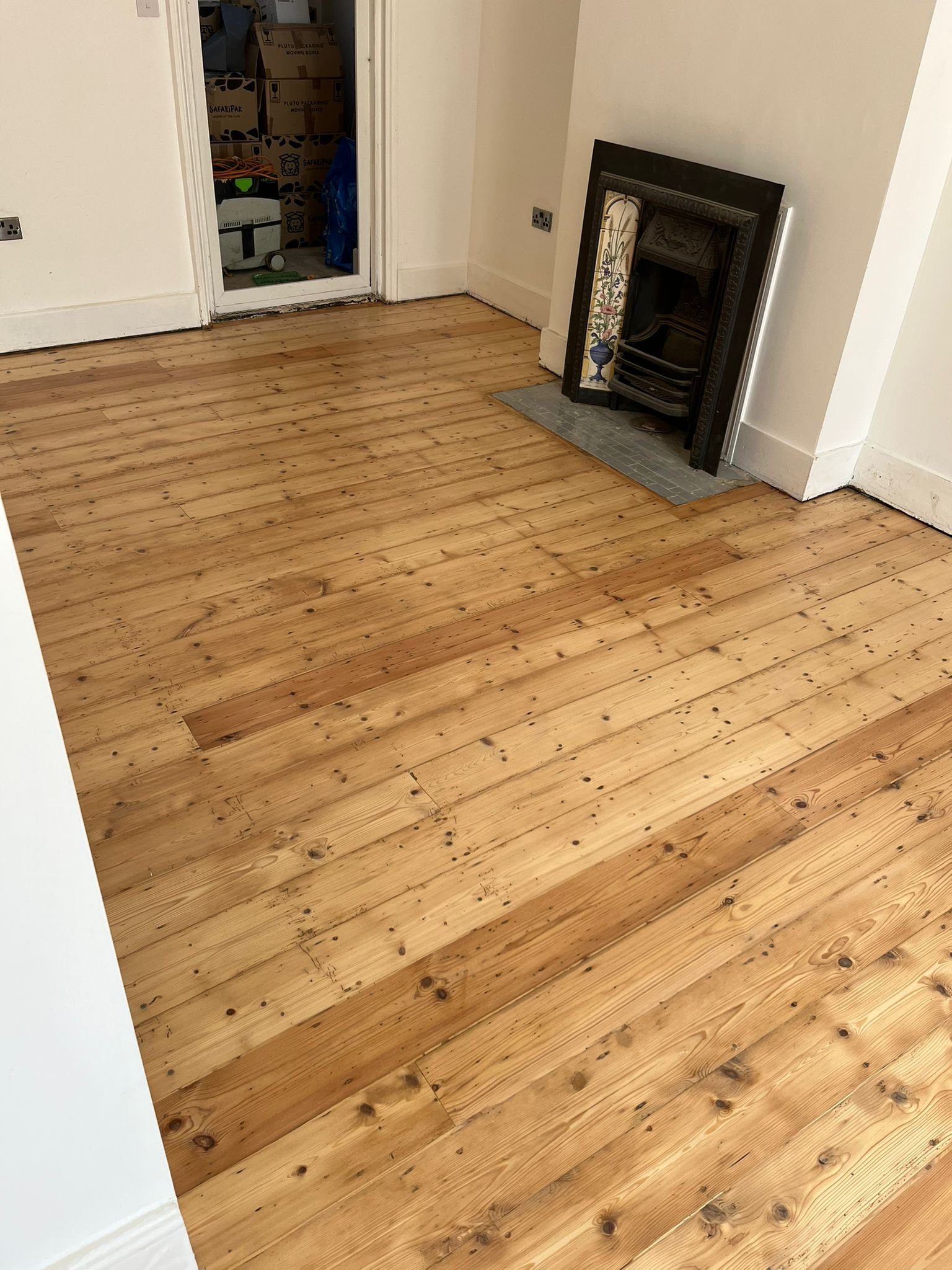
- Lacquer — hardest wearing, easiest to clean, needs a full re-sand when it eventually wears through.
- Hardwax oil — matt and natural underfoot, and repairable in patches without redoing the whole room.
- Oil — the most natural look, needs re-oiling most often.
For a hallway, or a house with dogs, we normally suggest lacquer. For a living room where the floor should feel like timber rather than plastic, hardwax oil.
What we work on
Pine floorboards, oak boards, engineered wood, herringbone and chevron parquet, block parquet, stairs and landings, and commercial floors, halls and gyms.
Get a price
The quickest way is to send a photo of your floor. We can usually tell from a picture whether it needs sanding, repair or replacing, and give you a ballpark straight away.
Call 07344 467352 or email info@epic-floors.com. Open Monday to Saturday, 8am – 6pm. See our prices for guide rates — we are not VAT registered, so there is nothing to add on top.
Our work
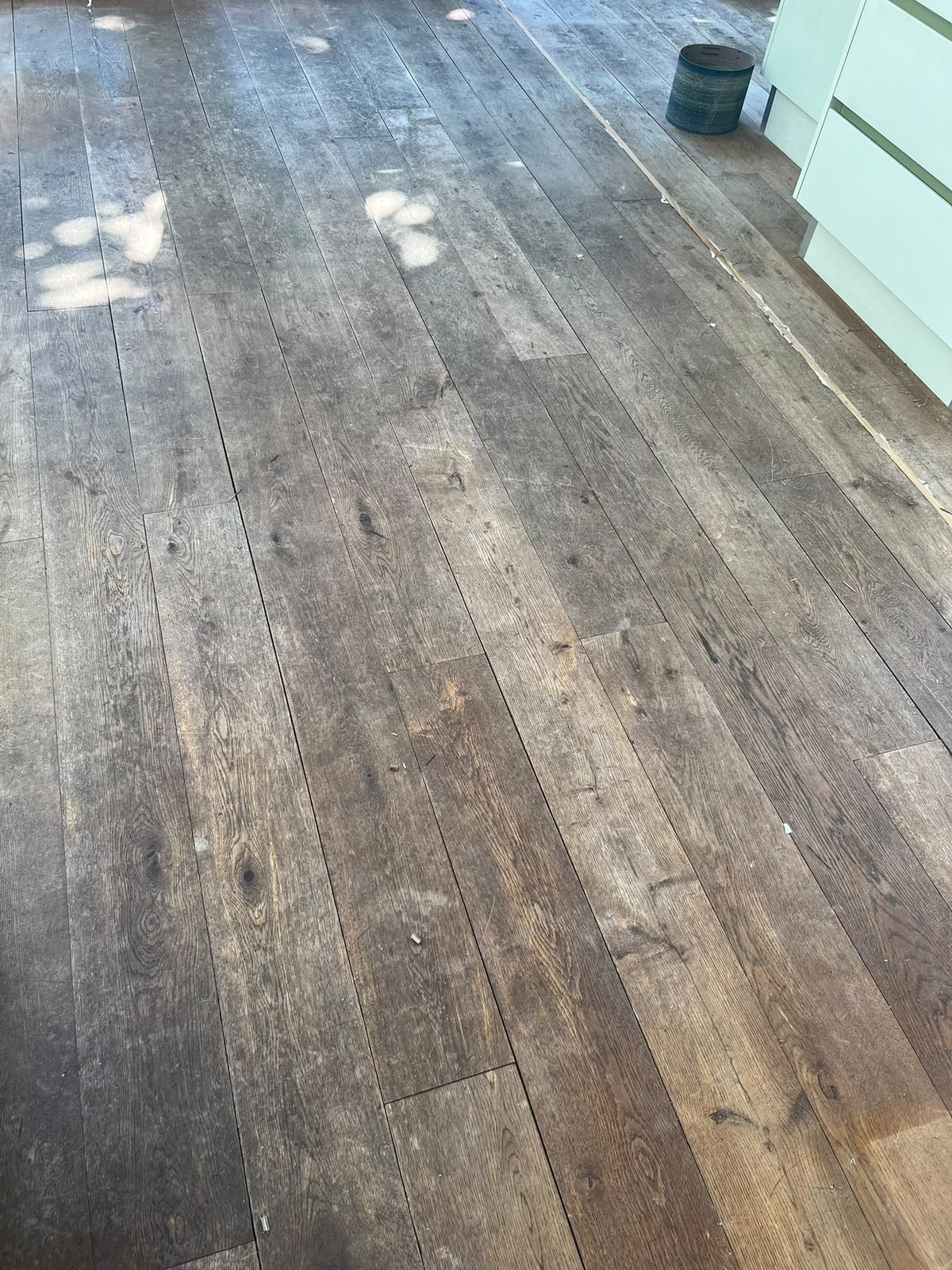
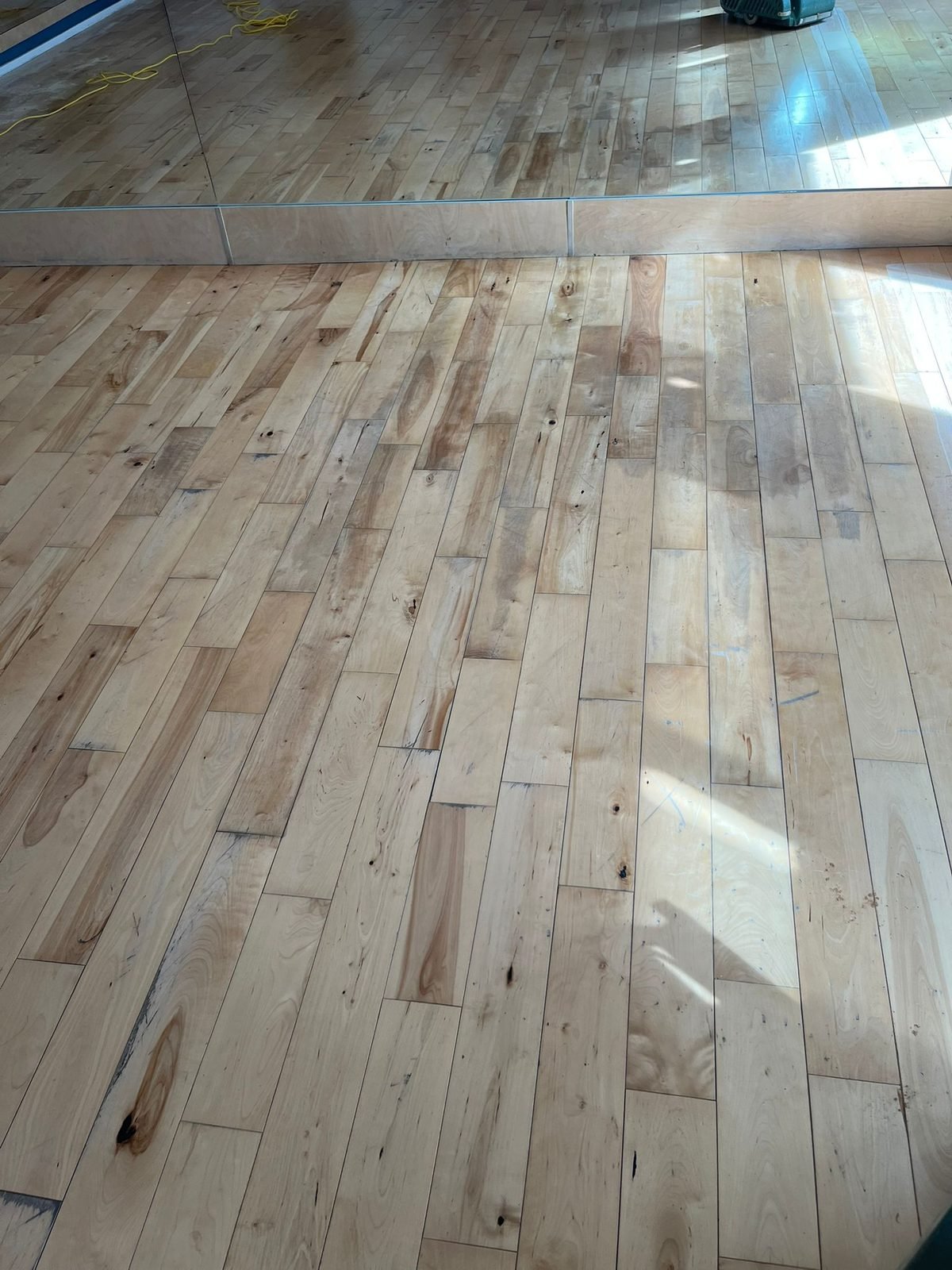
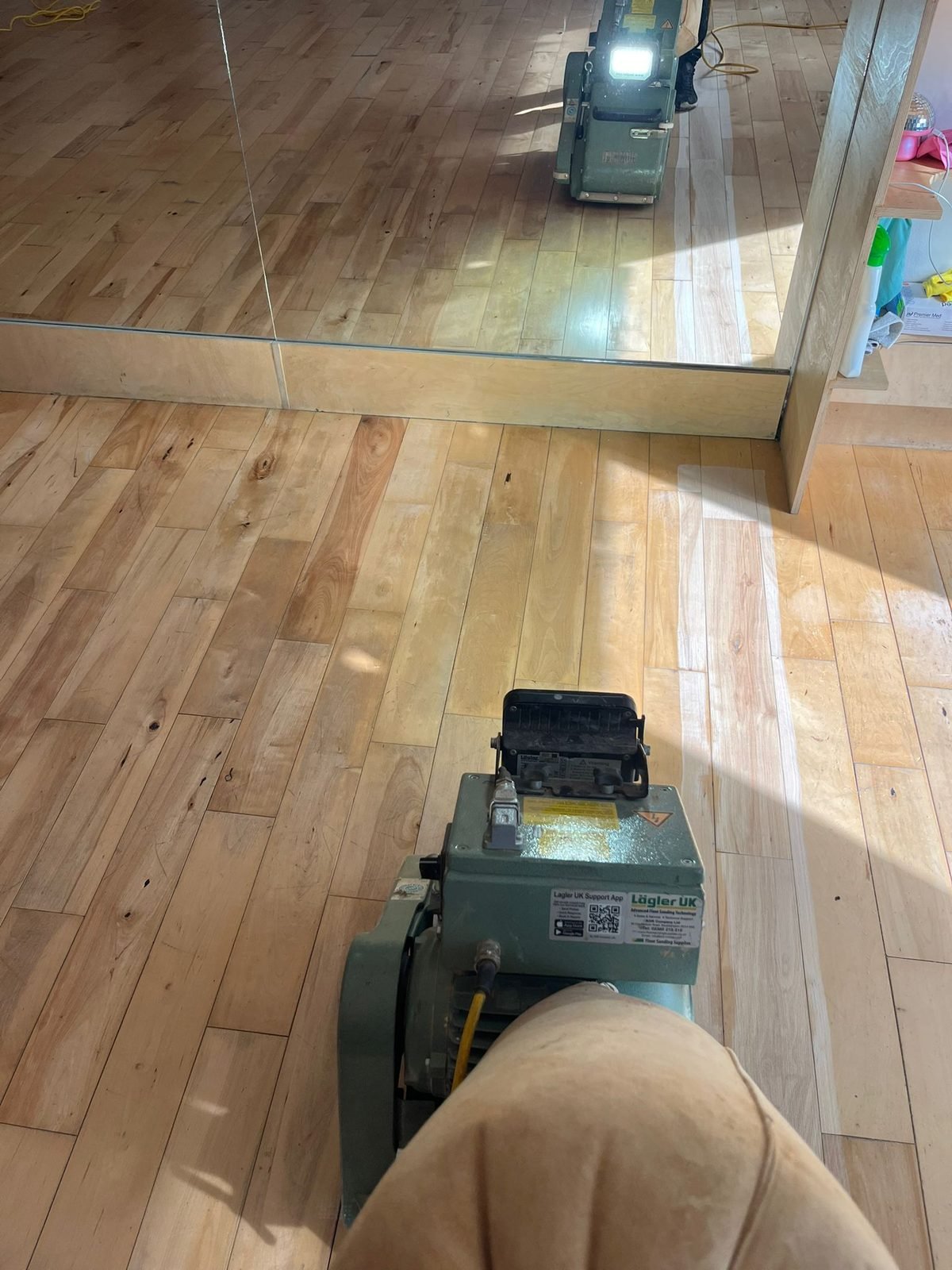
Recent work
Free survey
We look at the floor, measure board thickness and tell you honestly whether the work is worth doing.
Fixed written quote
No day rates and no surprises. £550 minimum project cost, and we are not VAT registered.
Get a free quote
Tell us about your floor and we will come back to you with a price. A photo gets you a far more accurate answer.