Skip to content Skip to footer

Herringbone patterns

Single and double herringbone, set out from the centre line.

Chevron patterns

Mitred blocks meeting in a continuous V.

Solid & engineered blocks

Engineered over underfloor heating, solid elsewhere.

Borders & feature strips

Perimeter borders and contrasting feature strips.
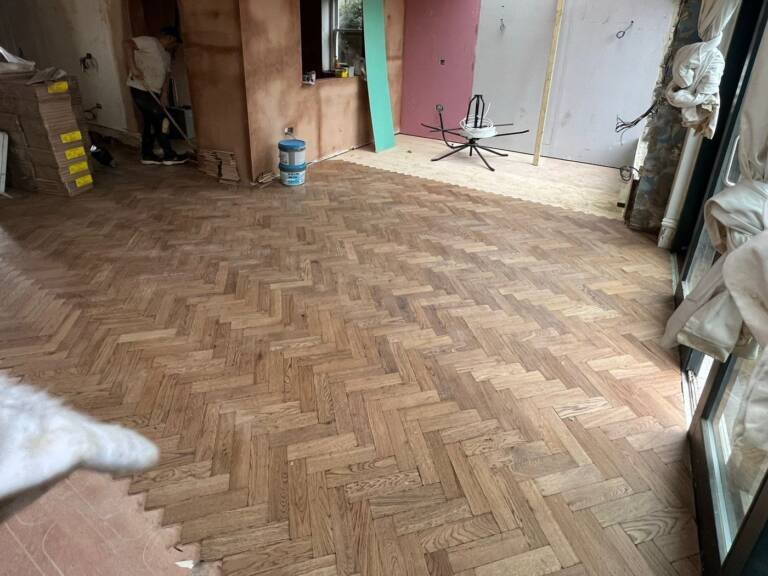
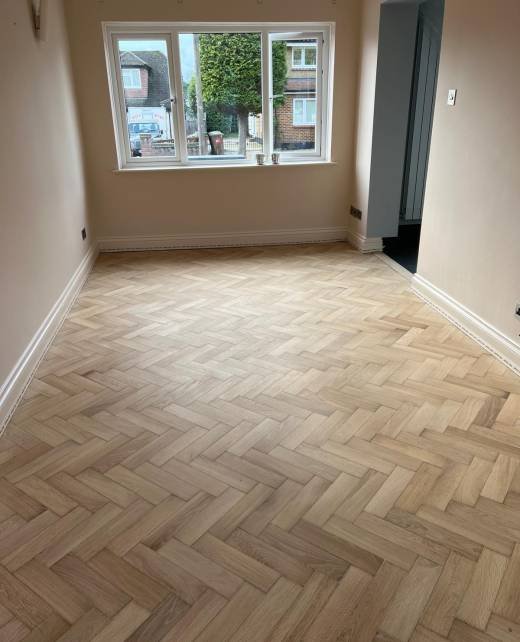
Light oak herringbone floor fitted in a bay window living room

Set out true, laid to last

What we do

Herringbone & chevron floor fitting

Herringbone and chevron are unforgiving patterns. If the centre line is out by a few millimetres at the start, the error compounds across the room and shows against every wall. We set out from the centre, dry-lay before fixing, and cut the perimeter last.

01. Set out from the centre
02. Solid or engineered
Why it is skilled work

A pattern that shows every mistake

Chevron is cut at an angle so the blocks meet in a continuous V; herringbone is cut square and interlocks at 90 degrees. Chevron costs more because every block is mitred, and there is no hiding a bad cut.

Over underfloor heating we fit engineered blocks, glued down. Solid blocks move too much with the heat cycle and will gap.

Set out from a centre line

A herringbone floor is set out from the middle of the room, never from a wall. Get that line wrong and the pattern drifts visibly by the time it reaches the far end.

Sanded flat, then sealed

Once the blocks are down, the floor is sanded across the pattern so nothing sits proud, then sealed. That final flattening is what makes a herringbone floor feel right underfoot.
Our process

How we fit a herringbone floor

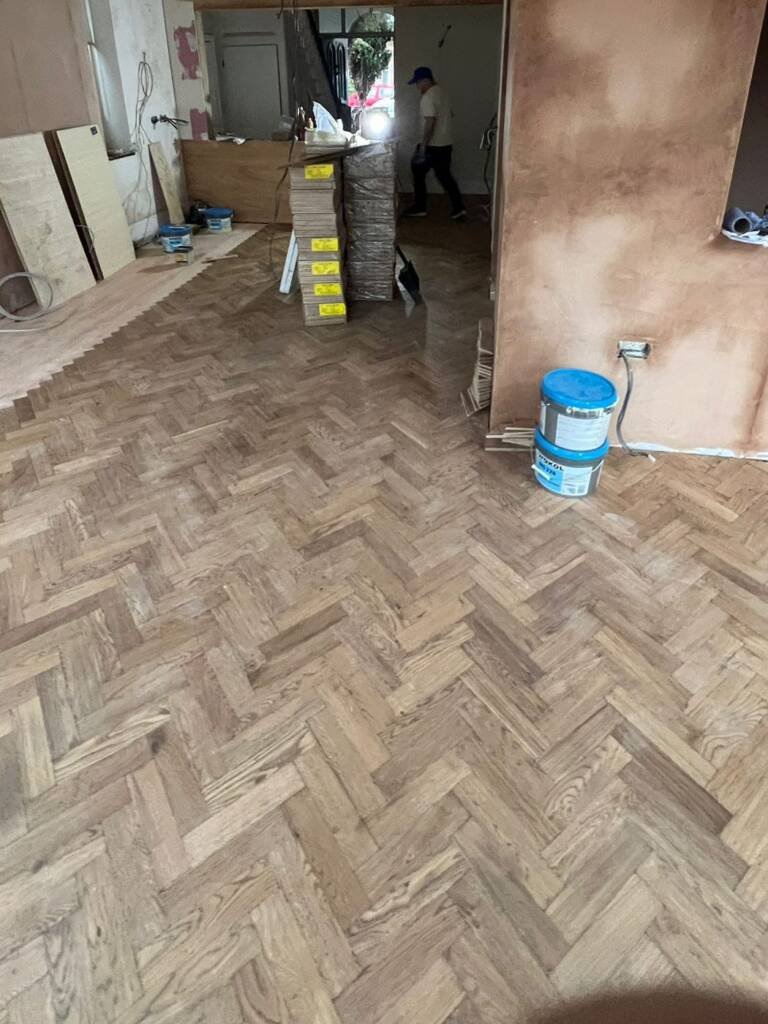
Survey and moisture test, then acclimatise the blocks in the room for five to seven days. Level the subfloor, set out the centre line, dry-lay a section to check the pattern against the room, then glue down working outward. Perimeter and border cut last, then sanded flat and finished.

Contact us

Get a price for your herringbone floor

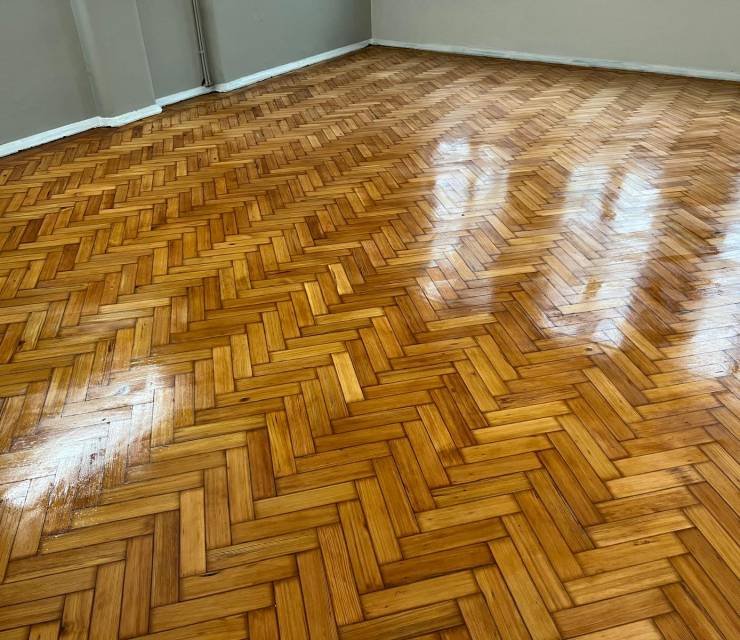
Honey-toned pine herringbone parquet floor with a high gloss finish